Wednesday, April 17, 2019
Walking Amadeus S01:E03 "Leyte Arrival"
One man's solo journey around the world - traveling through the

Tuesday, April 2, 2019
Ten Reasons Why You Should Never Travel the World for a Year (Part 2)

*For Part 1 of this list, please see:
http://www.walkingamadeus.com/2016/06/ten-reasons-why-you-should-never-travel.html
We all know there are a good list of reasons why you should travel the world and check off all those things on your bucket list. Of course, if your list requires some epic adventures, this may require some good chunks of time out seeking them. If you do care to invest a year of your life out traveling the globe, I've made a list of some things you may not have considered.
20. People Will Disappoint You
Sure, this happens at home, but at least there, people know they may have to deal with you for a lengthy period of time. Abroad, the downside of disappointing a foreigner is not so terrible, especially when you are operating on a tight budget. As opposed to short-term travel, it's hard to be disappointed in someone you don't know or just met. Be prepared to have people flake on you, not be the person you thought you knew, or just disappear from your life completely without warning or reason.
19. You Will Wear the Same Clothes
George Clooney's character in "Up in the Air" tells people to imagine putting everything they own into a backpack and feeling the weight of the straps on their shoulders. Of course, that's ridiculous, but the point is clear - you can't be mobile with too much stuff. Traveling for a long period of time in several places paints a stark reality of just how much you can take with you. Depending on what else you have to carry, I'd say you will have about a week's worth of clothing. And you get to wear these same clothes... again, and again, and again.
18. It Becomes Too Comfortable Putting Your Life in Danger
Have you ever crossed a busy street in Southeast Asia? How about that street food from a vendor with questionable sanitation practices? Fond of riding on the backs of motorcycles with strangers and no helmets? Long-term travel - often in undeveloped countries - brings new normals to your brain about what dangers you are willing to accept and how often. Some of these things can certainly expand your view of the world. Some learned behaviors can take you backward on the evolutionary ladder of survival.
17. People Will Never Understand
Maybe you are a really good storyteller. Maybe you have photos and videos and souvenirs to explain your journey of a lifetime. Look in the eyes of your friends who feel compelled to ask you about the trip they will never attempt. At best, they are probably struggling to understand. Your story is your story, and most people either will not care or will not understand what this adventure truly meant.
16. People Become Temporary
My first trip abroad to Europe, I met a few people I thought could be good friends going forward. That didn't happen. Spent some time volunteering, and saw people come and go daily. You begin to learn that most of the people you meet out in the world - no matter how great a time you had together - will probably just be a memory in a few weeks. Even with social media now, you learn that humans are only built to accommodate a finite number of friends, and out-of-sight often leads to out-of-mind. Furthermore, even if you start to feel "at home" in an extended stay during your travels and start to make friends, there's a good chance they think of you as temporary also.
15. So Much More of Your World Becomes Trivial
Look at all the things people get worked up about in your home country. Surely some things are legitimate concerns, but it's hard to care so much about gender-sensitive restrooms when you see children sifting through garbage for food.
14. The Reality of Why Problems Exist and Why They Will Never Get Solved
One of the things we do as world travelers is compare ways of life. I remember thinking China could just benefit from tissue paper, so people wouldn't blow their noses directly onto the street. Certainly, Kathmandu could clean up with some street sweepers. Why isn't Indonesia more welcoming to foreign volunteers? Sure, there are solutions out there to a lot of the world's problems, including in your home country. That doesn't mean governments and people have the resources, the will, or the genuine desire to solve these problems. Even nuns litter in the Philippines.
13. It's Difficult to Stay Healthy
I didn't say it was impossible. Great if you travel to surf, or perfect your yoga, or hike. These are great to keep your body in optimum condition. Unfortunately, air quality can be a problem. So can stress. So can a number of influences (or lack thereof) that can be more easily structured into or eliminated from our home lives. Unfortunately, long-term world travel can be hazardous to your nutritional, mental, and physical health if you don't have a steady dedication for indulging in the world with limits and precautions.
12. Water Becomes a Rationed Commodity
If you don't ever worry about getting enough drinkable water, you might not have thought of this. Sure, all over the world, if you have money and barring catastrophe, you can probably get water to drink. However, especially in hotter climates, water is something you have to think more about and grow to appreciate how important it really is for survival.
11. You Get Too Used to Being a Target for Bad People
Imagine a world, if you will, where your transportation charges you double what they charge a local, the money changer rips you off, your personal belongings are targets for thieves, and women are nice to you only to hit you up for money. It's bad enough that these things happen. Unfortunately, in your consequential quest to be a hard target, everybody is suspect, and that can be a very jaded way to live.
Now, as I said before, given all these warnings, if you still want to go out and see the world - actually live out in the world - I've done my part to admonish you. I can't be held responsible. And good for you.
Saturday, February 2, 2019
Tacloban Dining - A Post-Disaster Restaurant Recovery
When Super-Typhoon Yolanda struck central Philippines in 2013, it decimated much of what lay in its path, but the city has fought back in the five years since to one thriving with construction projects, new hotels, and an ambitious growth in new dining establishments. As a restaurant professional of over two decades and someone who has seen this city rise up in recent years, here are my picks for where to visit, what to eat, and some advice for concepts navigating this growing landscape.
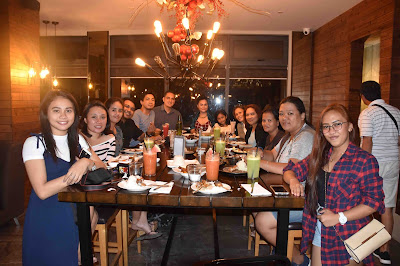
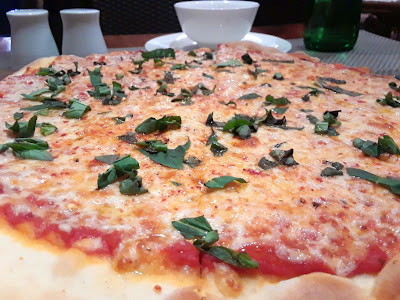 Guiseppe's is one of Tacloban's oldest restaurants, serving authentic Italian specialties such as different pastas, meats, and fish, as well as some Filipino favorites to welcome those who cannot go a meal without rice (not risotto). The owners are often there keeping a watchful eye on the dining room and welcoming guests such as the Mayors Romualdez, to locals, to foreigners like me. Staff are always friendly and prompt; the servers even made me a welcome back sign for a group photo one arrival! Ambiance is warm and comfortable. Go for family-style dining or single dining. I'm told the pork chop is a local favorite, but I usually go for the pizza. My first critique was that I like a Margherita pizza that has a better balance of the red, white, and green (rather than a cheese pizza with a few slices of basil for pizazz), and they are happy to accommodate. The pastas are delightful, but sized appropriate for a coursed primo, so you may consider ordering a secondo or antipasto if you are fairly hungry. No Filipino spaghetti here (grazie!)

Recent years have seen the growth of several in the coffee shop category, but few offer what Jose Karlo's and their newer sister restaurant Rovinare do so well. Both offer unique and cozy atmospheres for a cappucino or a nice lunch. They offer couches and different tables perfect for a business meeting or getting some work done in some peace and quiet secluded from dusty and noisy Tacloban. You can get lasagna or french toast paired with your choice of traditional coffees or sweeter coffeehouse concoctions. You can always find something sweet and delicious for dessert if you choose to linger; I like the apple pie a la mode. All day breakfast is much appreciated as are the smiles!

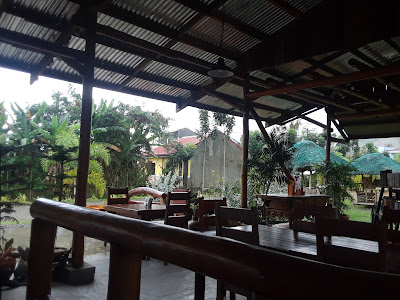
 Outside of downtown on the way to San Juanico Bridge along the highway is a sign for barbecue - "smoked low and slow." I instantly knew they weren't selling the same innards and pig fat on-a-stick that are at EVERY SINGLE BBQ STALL IN THE CITY. I found this place on accident while walking by, and it may be unlike anything I've been able to find in the city, with it's long entrance past a manicured lawn and newly planted trees, bamboo huts for semi-private dining, and an outdoor dining room that feels a bit like a biergarten in Munich. However, few actual barbecue items exist on the menu from this American's perspective (and fewer when they are sold out of pulled pork), but I think that's fine for a new restaurant, as long as they do what they do well. The burger was a good choice - with fried egg and onion rings. I really must go back for the brisket, although it was a bit more than I wanted to spend at lunch. Grab a few friends and take the multicab out here and enjoy the day.

Giuseppe's Ristorante
Italian (173 Avenida Veteranos)
Italian (173 Avenida Veteranos)

Dream Cafe
Filipino & Australian (222 MH Del Pilar St)
Filipino & Australian (222 MH Del Pilar St)
www.dreamcafe.ph


Just around the corner from Giuseppe's is this casual restaurant and bakery. In my volunteer days in Tacloban, this was a favorite Sunday morning treat for us foreigners who wanted some eggs and hash browns in a pleasant air conditioned atmosphere. Open for breakfast, lunch, and dinner seven days a week, Dream Cafe is an oasis of comfort food, whether you want their Dream Big Breakfast from their all-day breakfast menu, Chicken Cordon Bleu, or Crispy Pata. I'm actually a little ashamed that I only really go there for breakfast (even in the afternoon), because all the food is consistently quite tasty.
Cafe Lucia
Coffee Shop (Rotary Center, Real St., Sagkahan)
Coffee Shop (Rotary Center, Real St., Sagkahan)

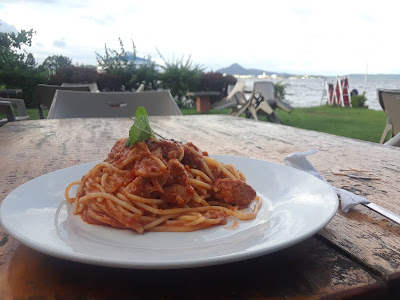
Self-labeled a "coffee shop," Cafe Lucia is another fixture in the city's culinary landscape, yet it is not a full-service restaurant. The draw here is the location - situated with lawn seating on the Concobato Bay with gorgeous views of coastal Tacloban and the airport in the distance. Come for the coffee or a beer and enjoy the sea breeze, come as I do for the Tonno Pasta from their limited menu and watch day turn to night, but don't come for the service - while fairly efficient if you don't mind going back to the counter to order what you need, you would be hard-pressed to see a smile or hear a "welcome" or a "thank you" at any time in this establishment. Ordinarily, that might be an issue, but like I said - location.
Fyzz by Hotel XyZ
Greek & Japanese (P Zamora St)
Greek & Japanese (P Zamora St)

Speaking of ambiance, Hotel XyZ is one of the best hotels in the city, so you would expect a restaurant to match, the Fyzz dining room perched up on the 9th floor has views that are unparalleled in the city as well as a comfortable, hip, lounge-style feel that is rare on this island. This alone is worth the trip here, and they even have live music acts in the evenings and a cocktail program that seeks to impress. Unfortunately, I always feel this place should be better than what it is. For the price and location, I would want more memorable cuisine; I would want all the guests' entrees to come out at least relatively at the same time; I would not want to have to pay separately for both a gin and a tonic when ordering a cocktail, which can be a bit expensive and annoying. This of all places in the city, one might expect a service staff to be trained to make appropriate recommendations, yet that doesn't seem to be taught very many places in the country outside Manila and Cebu. All of that being said, Fyzz is a classy place that offers uncommon luxuries in a city not accustomed to such and can be a charming way to spend an evening.
Jose Karlo's / Rovinare
Coffee Shops (Real St - Downtown & San Jose)
Coffee Shops (Real St - Downtown & San Jose)

Recent years have seen the growth of several in the coffee shop category, but few offer what Jose Karlo's and their newer sister restaurant Rovinare do so well. Both offer unique and cozy atmospheres for a cappucino or a nice lunch. They offer couches and different tables perfect for a business meeting or getting some work done in some peace and quiet secluded from dusty and noisy Tacloban. You can get lasagna or french toast paired with your choice of traditional coffees or sweeter coffeehouse concoctions. You can always find something sweet and delicious for dessert if you choose to linger; I like the apple pie a la mode. All day breakfast is much appreciated as are the smiles!
Kuya J Restaurant
Filipino (Robinson's Mall - Marasbaras)

Despite my best efforts to exclude large chain restaurants, Kuya J has consistent delicious Filipino food, and locals love it. With many offerings as family-style portions, it's great to go as a group and share traditional foods such as beef caldereta, pork sisig, or halo-halo. I went back by myself and had a delicious bulalo soup. The mall setting is a bit bright and not such an escape, but the food quality is sure to please the traveler and the local alike!
Brews + Breakfast: Fusion Coffee
Coffee Shop (832 Brgy 83-A Burayan, San Jose)

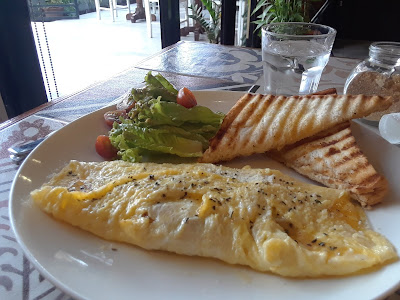
Walking in the door, you can tell this place is serious about its coffee - with a pour-over station adjacent to the counter that has also the giant espresso machine and a chalkboard that lists the origins of the available coffee beans. You might conclude by now I am a big fan of breakfast throughout the day - this is yet another - and they do the best scrambled eggs I have had in a really long time, maybe ever. Bonus points for including some salad with the foods; veggies are often overlooked in this city. Service is very friendly and welcoming.
Chew Love
Diner/Filipino/Asian Fusion (P Gomez St)

Home to thousands of cellphone-addicted, selfie-obsessed college students, Chew Love is an Instagram and Facebook haven, with everything in sight just as cute as a heart-shaped button. The food is just that too - cute - although some portions a bit small for my taste and the mac-n-cheese not at all for my taste. You can find classic beef, fish, and chicken Filipino dishes fit for a Barbie tea party and fun takes on refreshing non-alcoholic beverages. While the cuisine may not be the top draw here, the place is just so damn cute that you kind of overlook that little fact, and the clientele are probably more interested in what's going on in the virtual world anyway. I recommend the fish.
Sean's BBQ Pit
Barbecue (Brgy Tigbao Diit)


Otabeya
Japanese (Esperas Ave)

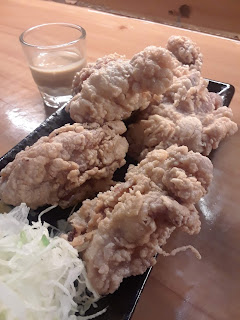
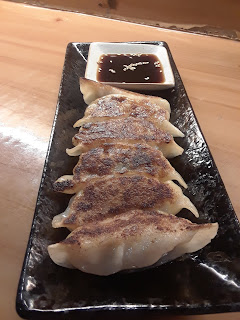
Just across the street from the playground at Astrodome and the Typhoon Yolanda Memorial in the wedge of buildings that begin to separate Esperas Avenue from Real Street, on the second floor, is one of my new favorite eating destinations. On a personal quest to find the world's best ramen, this is not it (I swear these are places I recommend), but it is well-made and tasty. However, you are greeted in gleeful Japanese upon opening the sliding door to enter. Friendly smiles welcome you immediately and make you feel at home, commensurate with the claim of "home cooking." Aside from the two ramen choices on the menu (I prefer the spicy, and in the photo they added an extra half egg), most of the rest of the menu is more izakaya in style, and everything is tasty and very well done. Try the seared and delicately moist gyoza, the unbelievably tender chicken karaage with sesame sauce (I add some of the hot chile oil), and the steamed spicy edamame. Yes, try those, but the highlight for me is the takoyaki. Someone brought the idea of takoyaki to the Philippines, yet outside of Otabeya they don't seem to get it right. Here the takoyaki is perfect - hot and creamy center, tender chunks of octopus, and bonito flakes dancing as a garnish atop the hot deliciousness. Go.


Wednesday, January 23, 2019
The Racism Wolf You Love to Cry

Let’s not pretend you care about racism. Sadly, many of my
fellow Americans do not even seem that concerned with truth. We care more about
what supports our version of the truth, and we can all see (if we try) that is
having devastating consequences.
When I first watched the video from the National Mall this
past weekend featuring the now famous encounter, I was saddened and angry like most
people. So, I watched it again, and it seemed so heartless. Furthermore, I personally
identified with everyone present – someone of white heritage, a conservative, a
Catholic, a proponent of the right to life… and a Native American. It didn’t make sense. Surely, a trained progressive would tell me that is
because I am privileged not to see racism. However, a correction should be made - I choose first to see truth.
The primary account of the story was that the high school
boys surrounded Nathan Phillips – a Native American Man – and ridiculed him as
he peacefully played his drum. According to Phillips, he was responding to the
boys who were chanting, “Build That Wall” and were acting angrily toward him
and others. Of all the cameras recording this situation that day, not one seems
to have recorded the purported chant. Of all video footage available, the boys do
not appear to be angry. They were in effect having an impromptu pep rally, as
claimed by a participant to counter or drown out the real hate – from a small
group of extremely vocal “Black Hebrew Israelites.”
If this is the same group of men who gather to preach their intolerance
at Metro stops in Washington, D.C., then I am somewhat familiar with their
rants, and locals usually just walk by in attempts to ignore them. On the National Mall
that day, these “preachers” are recorded calling these high school students
from Kentucky “dusty ass crackers,” “incest babies,” “school shooters,” and
more. In addition, they made hateful references to women, Catholics,
homosexuals, and even Native Americans as “Uncle Tomahawks.” Yet, no one in this
national knee-jerk outcry have a tenth of the interest in denouncing this pure,
blatant hate speech in their quest to confront racism. Why is that? After riding public transportation in
Washington, D.C. for years, this kind of black-on-nonblack vitriol is not
unheard of, and nobody raises an eyebrow. I have been threatened with gun
violence, called an Anglo-Saxon, told my mother must be a whore to have a son
like me - all within the Metro system and once by a Metro employee. No one stopped
a bus or stepped in to protect me on the train, and certainly no one started a
viral campaign to counter or promote violence against my verbal attackers. People
just look the other way.
Why? Because that’s not the way racism is supposed to work.
White people are racist. Republicans are racist. “Make America Great Again” caps
are inherently racist. Confronting someone who is from a traditionally
oppressed group is racist. So, you have a Native American with cameras rolling
behind him walk up and get in the face of a white boy with a MAGA hat – who
doesn’t budge - and you have liberal internet gold! Never mind, these boys were
not recorded saying anything hateful. Never mind, these boys seemed to be
chanting along with Mr. Phillips happily. Never mind that the boys were audibly
uncomfortable with one of their own African-American classmates being called the
N-word or with homosexuals being openly disparaged. Never mind that one of the
other Native American instigators told the boys to “go back to Europe, where
you came from; this is not your land!” No, that’s not the way racism is
supposed to work.
People like to tell other people how racism
works, and to some extent, I appreciate the enlightenment. However, it’s gone
too far, and people have overplayed their hands. Too many people rely too heavily
on this too soon, that they do the actual cause of seeking racial harmony
(wait, what?) harm in the attempt to appear in the moral majority. If you
rushed to judgment, you don’t care about racism, and you don’t care about the
truth. You care about yourself - whether you are a news outlet trying to get
clicks, a member of Congress trying to score political points, or just a
regular person trying to be woke. You want to be a part of this Indian’s peace prayer
chant? Calm down and see people and situations for who and what they are,
regardless of what that can do for you.
Friday, January 4, 2019
Kim from the Philippines

She lit up the room with her pensive gaze, quietly waiting for her turn to board. This room was an airport gate in Cebu. A quick glance at her had me, but I never try to speak to a woman at the airport; people come and go vast distances from this place (me included), so why bother with someone you will never see again? Carry on.
However, boarding that Philippine Airlines flight 2927, I made my way through the aisle to find my seat and had to do a double-take - actually, triple-take - of my boarding pass, because that same beauty who had caught my eye was there at the window seat next to mine! Travels have taken me on many flights, and it is a rare occasion when I will actually speak a word to my seatmate - even for hours-long journeys. But this time was different. She quietly read her Bible, with all apparent desire to keep to herself for the flight. Years previous, I had interrupted a woman from reading to make her acquaintance, and it did not go nearly well enough to warrant another attempt on this occasion, however I was quickly resolute in giving it a go. I like to think that God was both my witness and my first test as Kim and I engaged about Jesus and the Bible. In the course of that relatively short inter-island flight, she nearly immediately surpassed my several main criteria for the ideal woman.

But then, what is the ideal woman or the perfect mate? Sometimes, people seem ideal, but circumstances are not. Maybe there is no perfect, or maybe we all come into one another's lives to just play a part in their puzzle, helping to make them complete at a later date... and vice-versa.
Kim and I did go on to meet in Qatar, the Philippines again, Tanzania, and throughout the United States. We are both world travelers, each making our way through our own discoveries and documenting along the way. I showed off to her, America: snowy Manhattan, the beaches of Southern California, our nation's capital, her first jazz show and rock concert, the Philly cheesesteak, key lime pie, Miami nightlife, the Golden Gate Bridge, high school football, Major League Baseball, Texas barbecue, the vast natural magnificence of Alaska, craft cocktails, and In-N-Out. While in the end, I am tempted to say she was not impressed. But could you blame her? The life of an international flight attendant is blessed with the best of the entire world; in her case, I'd say that is as it should be.

"Kim from the Philippines" is her vlog (video series) and social media persona which takes followers on tours with her to major destinations, as well as lesser-known excursions, all around the world. She takes her fans bungee jumping in Switzerland, through Cairo in a day, and even on a glass-bottom boat adventure for two in Seattle! You can find her on YouTube, Instagram and Facebook.
Saturday, December 15, 2018
President Duterte Rings Balangiga Bell
Duterte welcomes the return of the bells from the United States
After over a century away, the bells of Balangiga were returned by the United States to the Philippines. In a handover ceremony on December 15, 2018 President Rodrigo Duterte accepted them, and the bell was rung on the island of Samar for the first time since 1901.
Duterte's Remarks Accepting the Balangiga Bells
Wednesday, December 5, 2018
Kuya Culture in the Philippines
 |
In modern-day Philippines, a westerner-traveler could be forgiven at first glance of its bustling cities, English-speaking natives, and tourist-friendly resorts to conclude certain things about this vast archipelago nation. You might find it familiar. In fact, many of my observations of the cultures of the world start by noticing the differences, but taking some comforts in the similarities. On a short trip, you might even believe you have the country figured out. After all, we all belong to the human race. Why should we be so different?
I mentioned "short trip," because its easier to be somewhere for a short time; you see the top recommended sights, try the local flavors, maybe even catch a local festival of some sort. Done! Subtract that from the bucket list. I've now "been there." It actually is comforting to think we aren't all so different, and you'd be right for the most part; we're not. Our individual capabilities, our dreams, our passions - they are not so different. However, the way we do things - informed by history, religion, physical environment, economic capability, and tradition - indeed can be unique to place or nationality.
If you have spent any time in the Philippines, you know there are labels of respect that are frequently utilized. Beyond the ubiquitous "ma'am" and "sir," there are two other titles: "ate" (older sister) and "kuya" (older brother), among others. Yes, ate and kuya are terms of respect rigorously used within the the family structure, but they are also used commonly in direct reference to familiar people older than oneself (although different than a parent or grandparent) throughout the culture. On the surface, this doesn't seem to be of significant consequence, but in my many months spent in the Philippines, not only have I been "Kuya Mark" to many, but I see kuya so extensively used that it suggests Filipinos have an inherent brotherhood among themselves... as well as with foreigners who choose to accept and integrate into the culture! Your jeepney driver can be kuya. Your neighbor from whom you try to buy beer at his house in the middle of the night can be kuya. A stranger on the street in another town from whom you ask directions can be kuya. When you lend a hand to make a situation work, I believe you are being a kuya.
When I am here, I feel and see a people linked together not by skin color, ideology, or class. What I see here is not a culture that seeks an offense as the best defense, but a creed-based society. I think it is more than pure etiquette that strangers easily interact with strangers, foreigners are made to feel welcome, empathy reigns over sarcasm, and there is a brotherly bond that ties people together in a way that (though not without confrontation or moral failure) seems to make society work. Yes, every culture has its standards and rules, but I think one based so universally to the concept of respect is one that might provide some model for other nations, and indeed the world.

Subscribe to:
Posts (Atom)